We're based in Ridgecrest and I still answer my own phone, so when you call about a driveway, patio, steps or a slab here, I'm the one who comes out to look. Most calls come from homeowners whose concrete has cracked, sunk, started chipping or begun pooling water, and from property owners who need footings, a foundation or a lot poured.
Out here the ground and the heat decide most of the job. Desert soil that looks firm can settle under a slab that's only raked level, and summer sun can dry fresh concrete before it's finished, so we plan the base and the pour around both.
Why we dig out and pack the base
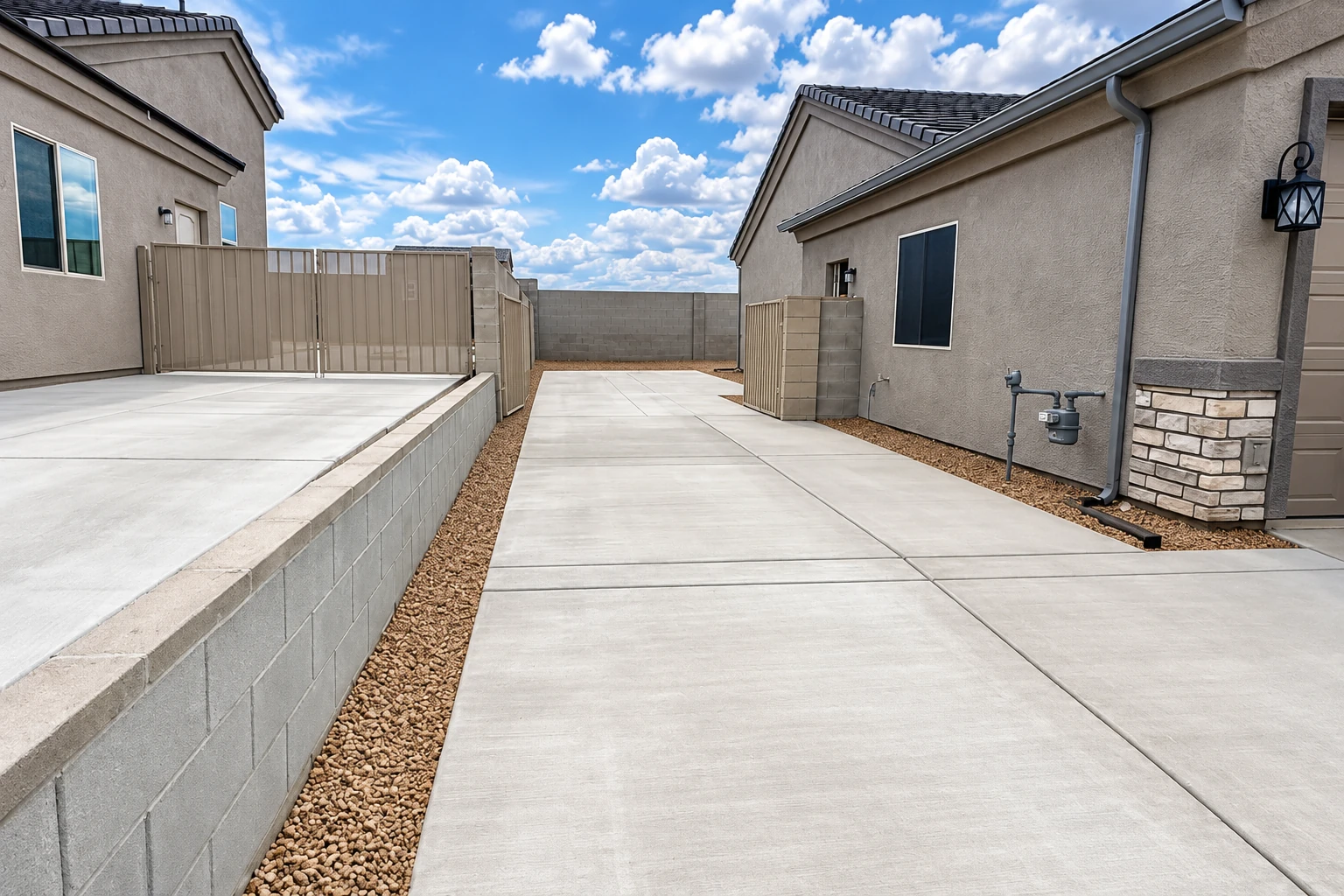
When we look at a cracked, sinking or uneven slab around Ridgecrest, the trouble usually started underneath, not on top. The subgrade, the ground your slab sits on, has to be dug out and packed hard, because a base that's only raked level settles with the dirt and takes the concrete with it. We also check where the water runs before we set forms, so the slab falls away from your house instead of pooling against it. You won't see any of this on pour day, and it's the first thing people want to cut from a budget. I'd rather trim a fancy finish than skimp on the base, since a nice surface on a weak base still cracks.
Pouring around the desert heat
Hot sun and dry wind pull water out of fresh concrete fast, and a top that dries before it's finished can turn weak and dusty later on. That's why we'd rather pour early in the day than in the middle of a summer afternoon, and why the heat can sometimes move a pour date. Once the finish is on, curing starts, the wait while the concrete hardens slowly and gains strength, and we keep it from drying out too quickly during that stretch. On most driveways and walks we leave a broom finish, a light brushed texture that gives your shoes and tires some grip.
What moves your price and your schedule
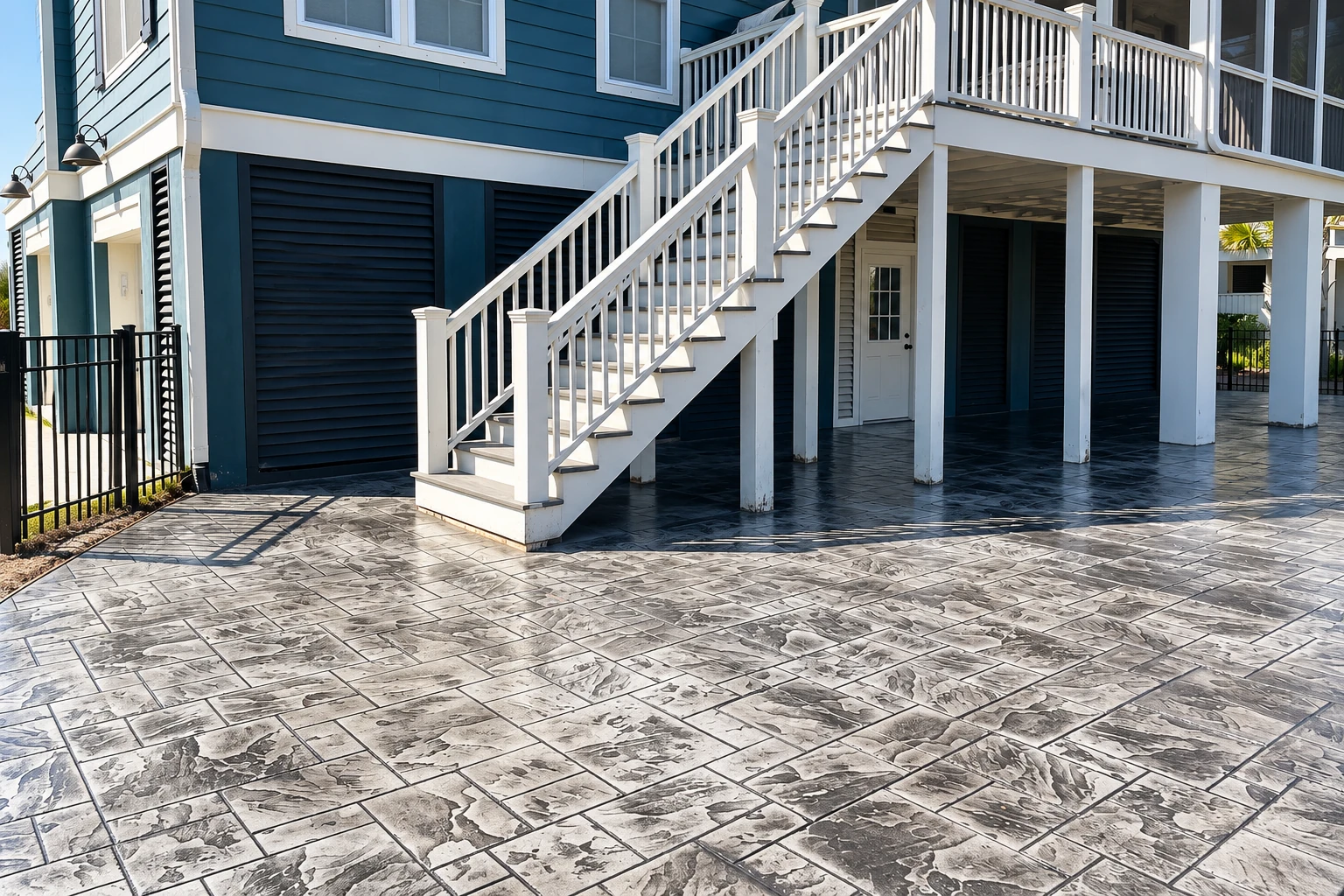
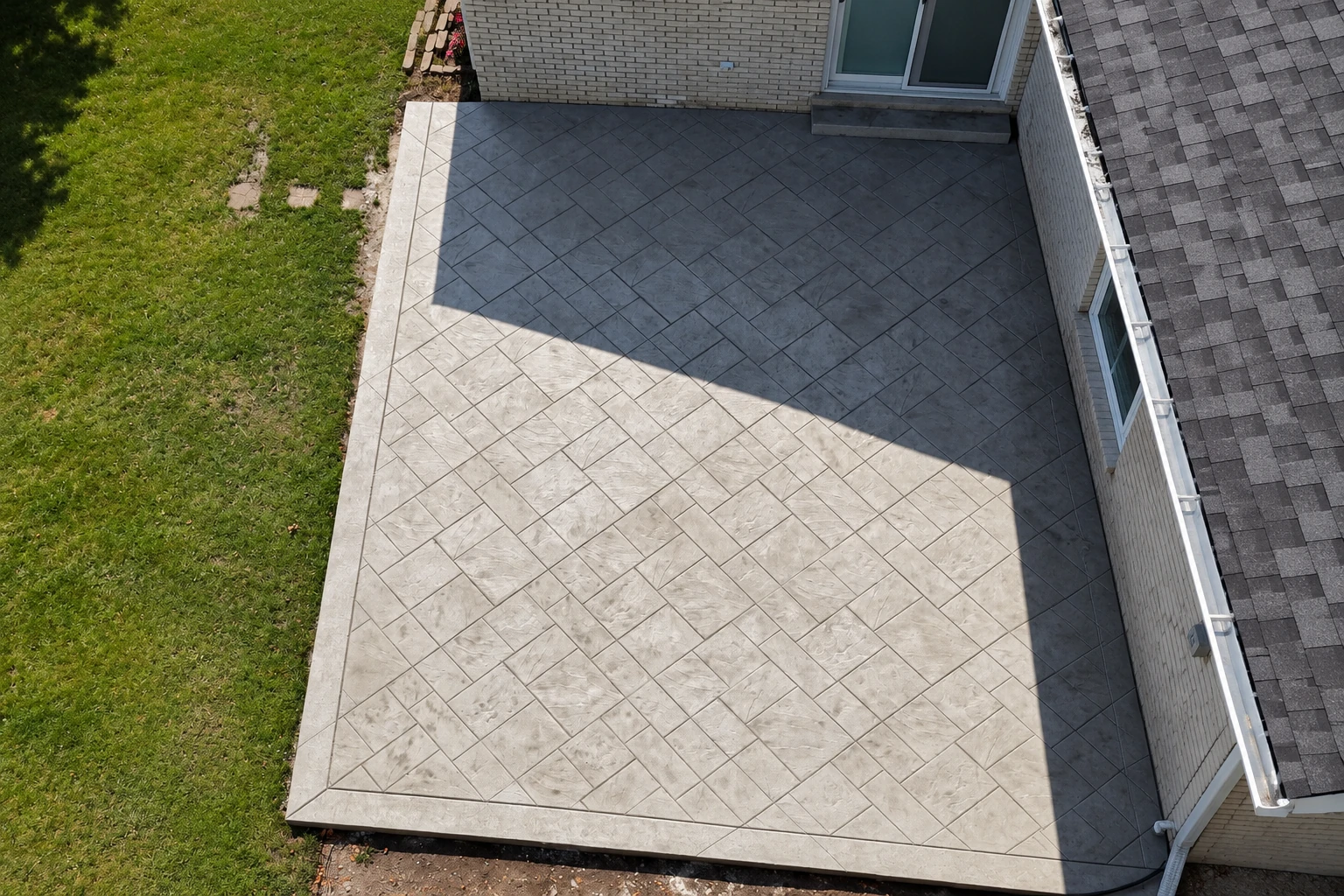
The price follows the size and thickness of the slab and how much work the ground needs first, so breaking out old concrete and digging out soft soil add to it. Rebar, the steel inside that helps hold the slab together, adds some, and a stamped or colored finish costs more than a plain broom finish. Access counts too, since a truck that can't reach the forms means pumping or wheelbarrows. The schedule turns on the base work, the weather and the curing wait, and that wait decides how long you'll park on the street with a new concrete driveway. I'll walk the job with you and give you a figure for yours.